
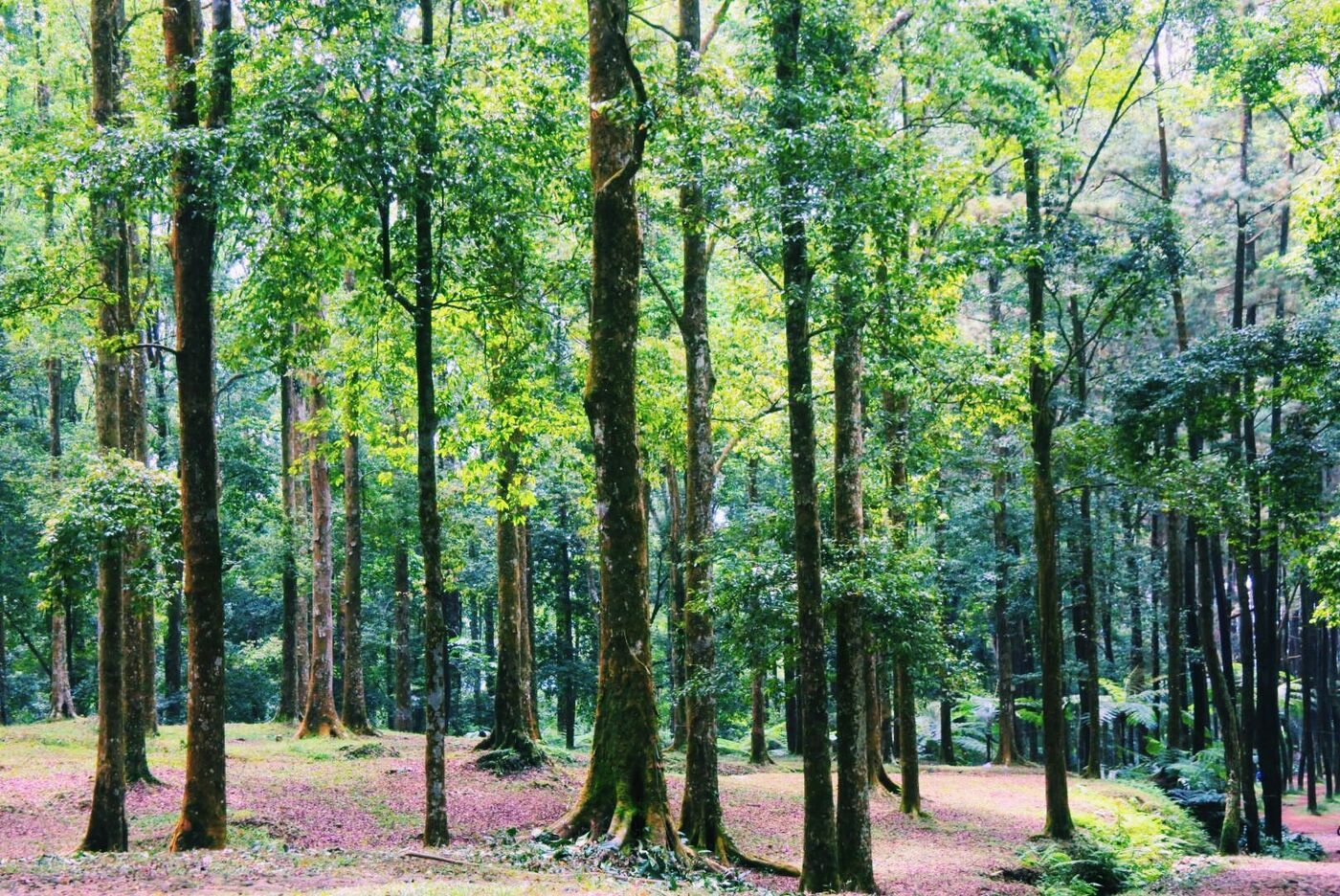
There is a moment on the canopy walk at Gunung Halimun-Salak when the forest floor drops away beneath the planks and you are level with the crowns of centuries-old rasamala trees. Mist drifts through the branches, a barbet calls somewhere in the green, and the temperature falls a couple of degrees. This is one of the largest remaining blocks of montane rainforest in Java, and its most famous feature — the jembatan kanopi — lets you experience it from the birds’ point of view.
Where it is, and why it matters
Gunung Halimun-Salak National Park (Taman Nasional Gunung Halimun-Salak, or TNGHS) sprawls across the highlands south-west of Bogor, straddling the border with Lebak and Sukabumi. Halimun means "mist" in Sundanese, and the name is earned daily. The canopy trail itself sits near Citalahab, deep inside the park, close to the Cikaniki research station that biologists have used for decades to study everything from primates to fungi.
The park protects habitat for the endangered Javan gibbon (owa jawa), Javan leopard, and hundreds of bird species. Every visitor fee and every guide you hire helps fund the ranger patrols and community programmes that keep this forest standing rather than cleared.
The canopy trail itself
The bridge is a narrow suspended boardwalk roughly 100 metres long, strung between tall trees around 25 metres above the slope. It sways gently — that is normal and part of the fun. You walk it slowly, one small group at a time, taking in bromeliads, ferns and orchids that live their entire lives in the treetops. Early morning is best: the birdlife is loudest and the light through the mist is unforgettable.
Around the canopy walk, well-marked ground trails loop through the Cikaniki area. Give yourself half a day here rather than rushing; the forest rewards a slow pace.
Getting there from Bogor
From central Bogor, the usual route is via Cipanas or Nanggung toward Kabandungan, then a long, rough final stretch to Cikaniki that really needs a high-clearance vehicle or an arranged 4x4. It is a genuine journey — plan three to four hours one way and consider staying a night at the park’s guesthouse near Citalahab rather than day-tripping. Many guests base themselves at HEBE Hostel in the city the night before, arrange a guide and transport through the park office, then set off early.
Permits, guides and season
You enter through the TNGHS office and pay the national-park entry fee; a local guide is required for the Cikaniki–Citalahab area and is worth every rupiah for the wildlife they spot before you ever do. The drier months, roughly April to September, make the access road far more forgiving, though Halimun is misty and can rain in any season — this is the "rain forest" in every sense.
Pack for a cloud forest
- Sturdy shoes with grip — the boardwalk and trails are often wet and slick
- A light rain shell; assume a shower even in the dry season
- A warm layer — mornings up here are genuinely cool
- Refillable water bottle and snacks; carry every wrapper back out
- Binoculars for the canopy birds and, if you are lucky, distant gibbons
- Insect repellent and long sleeves for the leeches after rain
Tread lightly
The rule here is simple: take nothing, leave nothing, feed nothing. Keep your voice low so the wildlife stays close, stay on the boardwalk and marked paths so the fragile understorey recovers, and hire a local guide so your visit puts money into the villages that ring the park. That is the whole philosophy we live by at HEBE — travel that leaves a place better than a hard-sell tour ever could.
In Halimun the forest is never silent and never still — go slowly, listen more than you look, and the canopy will show you far more than a checklist ever will.