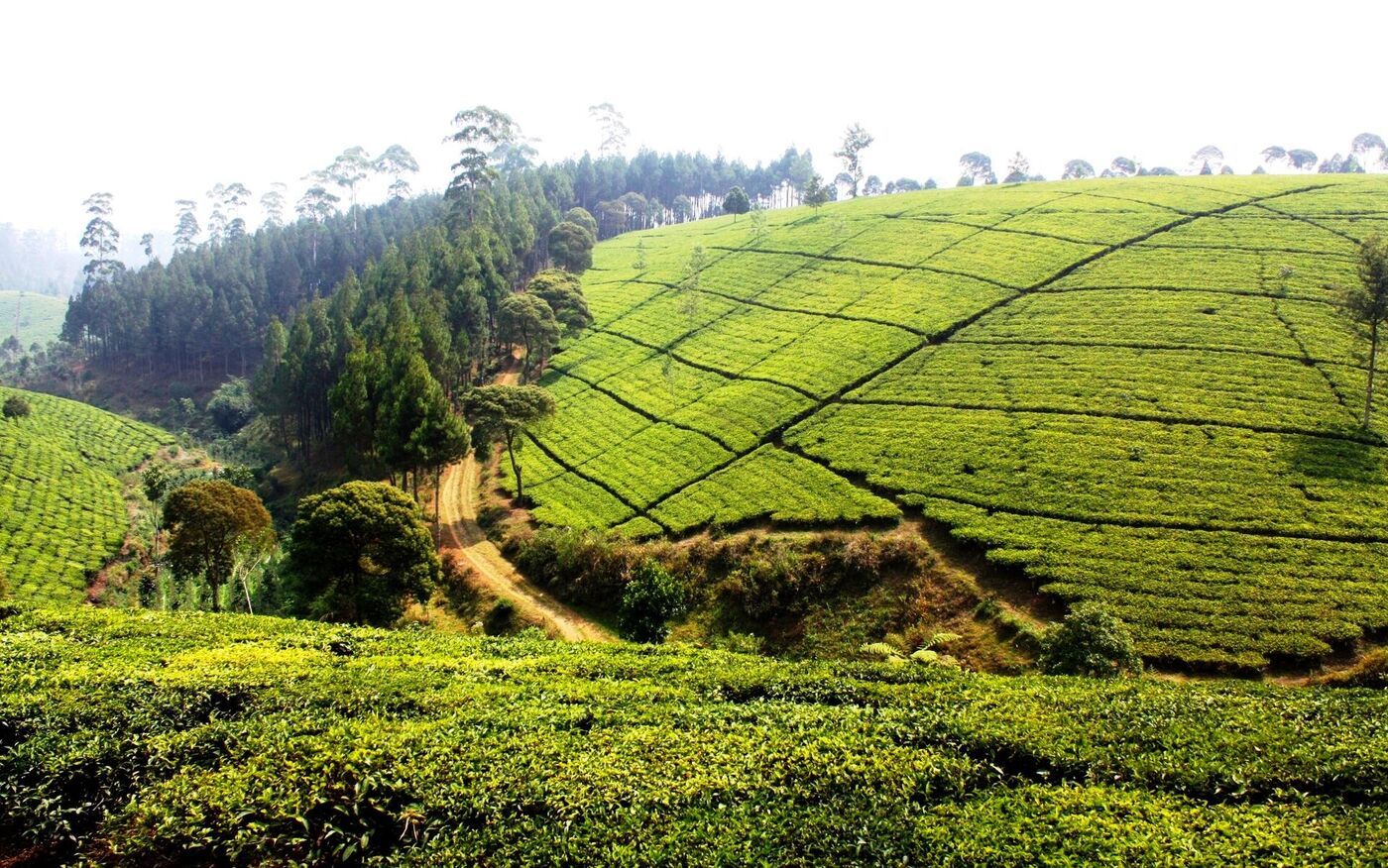
Look south-west from almost anywhere in Bogor and Gunung Salak fills the sky — a brooding, often cloud-wrapped massif whose name locals will tell you comes not from the salak fruit but from the Sanskrit for "silver." It is not a neat cone but a complex, deeply eroded old volcano, and that complexity is exactly what makes its ecology so rich.
A volcano that still breathes
Salak is dormant but far from dead. Its slopes vent steam and sulphur at several fumarole fields, the most famous being Kawah Ratu — the "queen’s crater" — where the forest suddenly opens onto a bleached, hissing, sulphur-stained hollow. These geothermal areas are dramatic and genuinely dangerous: the gases can be lethal in still, low-lying pockets, which is why you never go without a guide and never linger where the air feels wrong.
Forest zones up the mountain
Because Salak rises from warm lowland to cool summit, you pass through stacked ecological zones as you climb. Lush lowland and submontane forest gives way to mossy montane forest, then to stunted, wind-shaped growth near the tops. Each band has its own plants, birds and insects. The mountain is part of the greater Gunung Halimun-Salak National Park, and its forests are a stronghold for the same endangered wildlife — gibbons, leopards, hornbills — that the wider park protects.
Kawah Ratu, done safely
The walk to Kawah Ratu, usually from the Cidahu side, is the classic way to meet Salak’s volcanic heart. It is a rewarding forest trek to a genuinely otherworldly crater — but it demands respect.
- Go with a licensed local guide who knows the safe gas conditions
- Never enter the crater basin or the steaming vents themselves
- Turn back if you smell strong sulphur or feel dizzy — gases pool low
- Stay on the marked trail; the forest here is dense and easy to lose
- Check the mountain’s current status before you go; conditions change
Getting there from Bogor
Salak is remarkably close — the Cidahu trailhead on the Sukabumi side is roughly 1.5 to 2 hours from central Bogor, and other approaches sit even nearer the city’s edge. That proximity is a gift: you can be in deep montane forest within an easy morning’s travel from HEBE Hostel. Start early, and treat the mountain’s moods seriously.
Reading the mountain
Gunung Salak rewards the traveller who comes to understand it rather than conquer it. Learn to read its zones, respect its venting craters, and you will see the volcano for what it is — not a backdrop to Bogor, but a living, steaming engine of the whole region’s ecology, and a reason the forests around us are as green as they are.
On Salak the mountain tells you when to stop — trust your nose and your guide over your summit ambition, always.