
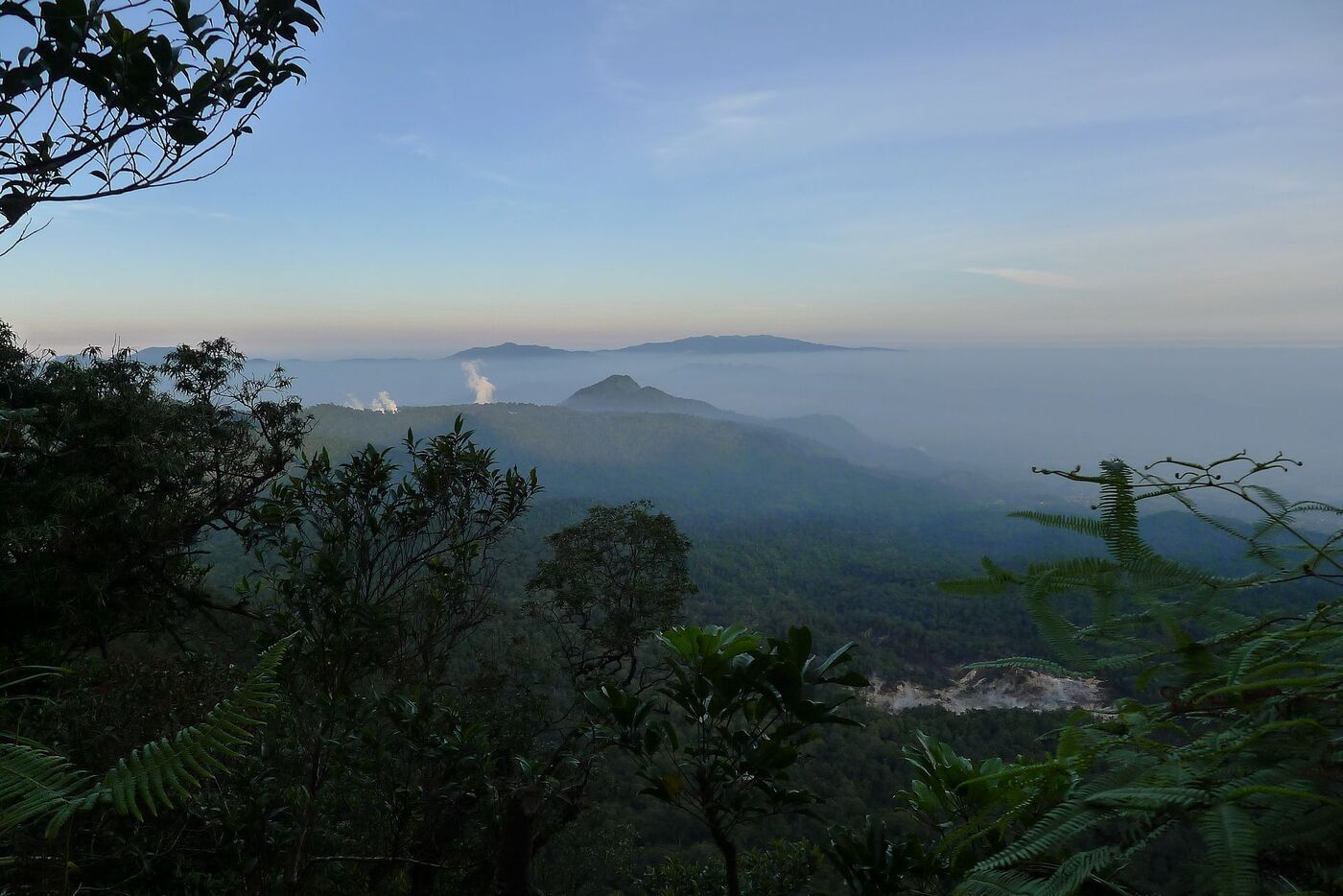
Near the crest of the Puncak Pass, tucked into the highlands above Cisarua, sits a small lake with an outsized reputation. Telaga Warna — literally "lake of colours" — appears to change hue through the day, from jade to olive to a deep tea-brown, as sunlight, cloud and the sulphur and algae in the water play against one another.
Why the water changes colour
The lake fills an old volcanic depression on the flank of the highlands, and the shifting colours are a mix of real chemistry and the theatre of the light. Dissolved minerals, suspended sediment and algae tint the water; passing clouds and the low morning sun do the rest. Sundanese folklore has its own gentler explanation involving a spoiled princess and a magical jewel — ask a local guide and enjoy the telling.
More than a lake
Telaga Warna sits inside a protected nature reserve (cagar alam), so the forest around it is the real headline. A short, shaded loop trail runs through tall trees loud with birds and, at dawn, sometimes the whoop of gibbons and langurs. Keep your eyes up. Because it is a cagar alam, the rules are stricter than an ordinary park: stay on the path and treat it as a sanctuary, not a playground.
Getting there from Bogor
The reserve entrance is just off the main Puncak road near the top of the pass, roughly an hour to ninety minutes from central Bogor when the traffic behaves — and considerably more when it does not. Go on a weekday morning: you dodge the Puncak weekend crush and arrive while the light is still doing its best colour work. From HEBE Hostel it makes an easy half-day paired with the tea estates just downhill.
Visiting responsibly
- Arrive early for the best colours and the quietest forest
- Stay on the marked loop — this is a nature reserve, not open ground
- No litter, no feeding the monkeys, no loud music
- Bring a light layer; it is cool and often drizzly up here
- Hire a local guide to spot wildlife and support the community
A quiet kind of visit
Telaga Warna is small, and that is exactly its charm — this is a place for a slow hour of watching, not a checklist stop. The biggest threat to it is simply too many careless visitors, so the kindest thing you can do is arrive quietly, take only photographs, and leave the forest as hushed as you found it.
Sit still by the water for twenty minutes and you will see the lake do the one thing its name promises — change, right in front of you.